

Quick Answer
Traditional signage suits a message that rarely changes, like your shop name on the fascia. Digital signage suits messages that change often, such as promotions, menus and stock. Many stores use both: a permanent sign for identity, digital screens for offers. Your best mix depends on how often your content changes and how many locations you run.
Your shop signage does two jobs. It tells people who you are, and it persuades them to walk in. Traditional signs do the first job well. Digital screens can do both, and they let you change the message whenever you like. So which one is right for your store? Here’s how digital and traditional business signage compare on flexibility, cost, impact and upkeep. If you run a store, our retail signage solutions page shows what DMX offers retailers.
What Counts as Traditional and Digital Signage
Traditional signage is anything fixed: fascia signs, lightboxes, window vinyl, printed posters, banners, painted or engraved signs. Walk into a signage shop and that’s mostly what you’ll see. Once it’s made, the message stays put until you replace it. Many signage businesses focus on fixed signs, while digital adds screens, media players and software.
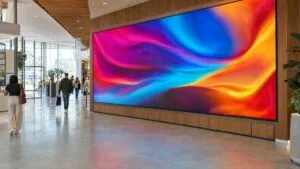
Digital signage uses screens instead: LCD or LED displays, digital menu boards, shelf displays and video walls, all controlled by software. You change the content in the software, not on a printer. DMX supplies the digital side, including window displays, video walls and in-store screens for retailers. New to the idea? Read our post on digital signage made easy for every industry.
Digital vs Traditional Signage Compared
| Factor | Traditional signage | Digital signage |
|---|---|---|
| Changing your message | Reprint, repaint or replace | Update in the software, in real time |
| Attention | Static and dependable for identity | Motion and video can draw the eye |
| Upfront cost | Usually lower for a single sign | Usually higher: screens, media players and software |
| Ongoing cost | Low once installed, plus the cost of each change | Power and content, with no reprinting |
| Several locations | Each branch needs its own printing and fitting | One platform can manage every location |
| Power and technology | None for most signs (lightboxes need power) | Needs power and a plan for backup |
| Best for | Permanent identity: name, logo, shop front | Promotions, menus, stock and seasonal content |
Where Traditional Signage Still Wins
Your shop name and logo don’t change every week. Fascia or storefront signage does that job without power, software or content to manage. It’s simple, and it works every day. Shop front signage often comes with rules too. Many municipalities regulate outdoor signs, and shopping centres usually set signage guidelines for tenants. Before you install any sign, digital or not, check your municipality’s outdoor advertising by-laws and your landlord’s rules.

Where Digital Signage Wins
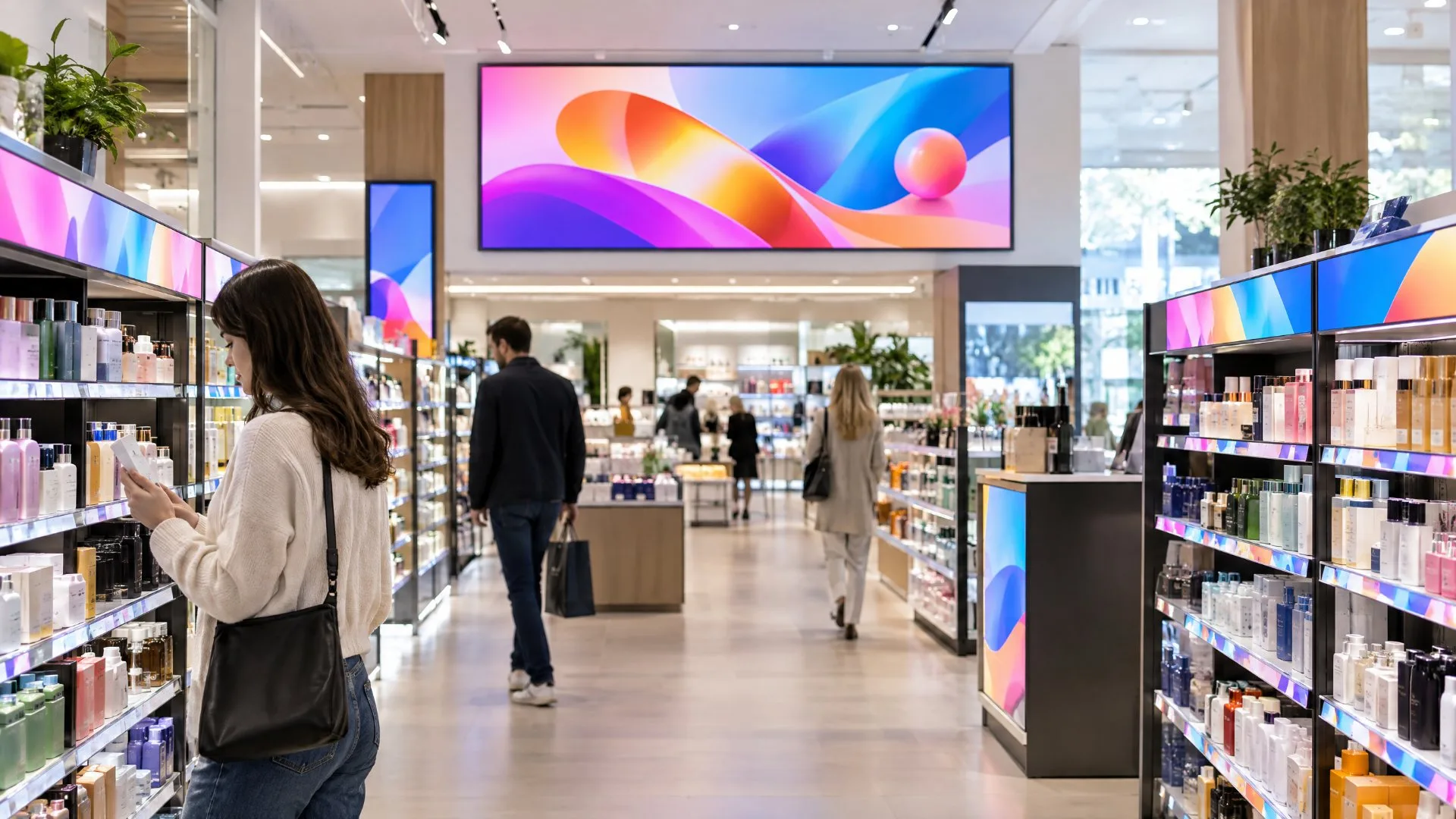
Digital wins when your message changes. Promotions, specials, new stock and seasonal offers go live in real time, with no waiting on a print run. You can schedule content by day and time, and segment it by corporate, regional or store level. That suits retail signage across several branches: every store shows the right message, and nobody has to deliver new posters.
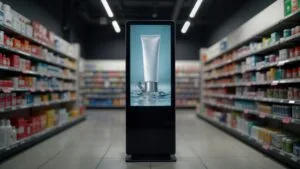
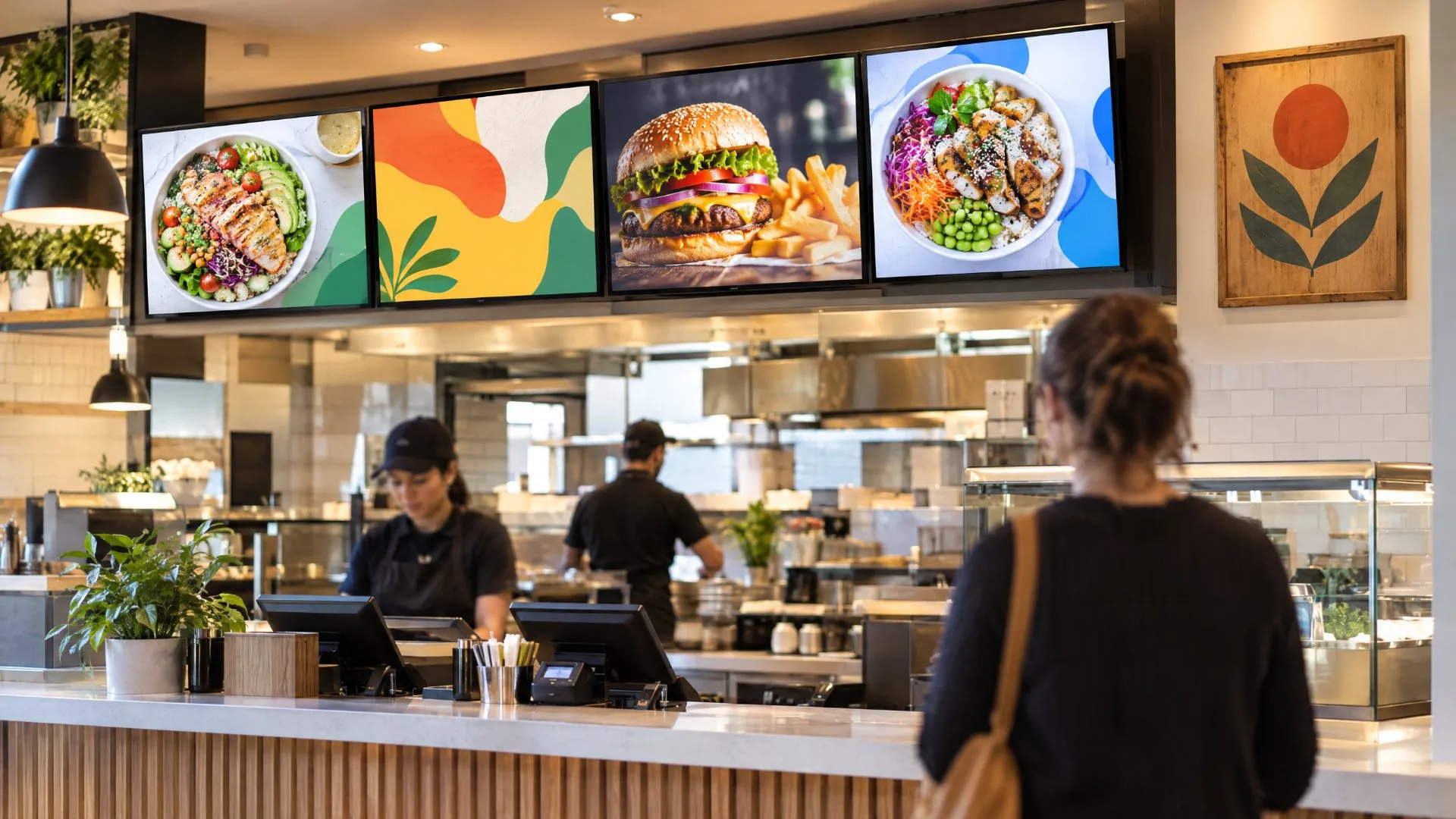
Screens carry video too, so you can highlight promotions and upsell right where customers decide. Restaurants gain the most from digital menu boards, where prices and specials change often. In shops, shelf displays put a promotion next to the product. The Harmony platform runs all of it from one place.
Which Option Suits Your Business?
The best signage for business depends on what you sell and how often your offers change:
- Retail store signage: keep a permanent fascia sign for identity, and add digital screens for window displays and in-store promotions.
- Shopping centre tenants: stick to the centre’s shopping centre signage rules on the shopfront, then use screens inside your unit or at the counter where allowed.
- Restaurants and quick-service outlets: go digital with menu boards, since prices and specials change often.
- Franchises: use digital signage to keep the same message at every branch.
- Offices and service businesses: keep a fixed sign for your company name, and use screens for reception messages and internal notices.
Why Many Businesses Use Both
You don’t have to pick a side. A permanent sign gives customers a fixed point of recognition, while digital screens carry whatever changes. A window display can pull people in, and in-store screens can carry the offer through to the till. Our post on turning window shoppers into customers with retail display screens shows how.

What to Check Before You Decide
Six questions will point you to the right mix:
- How often does your message change? The more often, the stronger the case for digital.
- How many locations do you run? More than one site makes central control worth having.
- Which rules apply? Check your municipality’s by-laws and your landlord’s or shopping centre’s signage rules.
- What’s your power setup? Digital screens need power, so ask about backup if outages affect your area.
- Who will update the content? Choose software your own team can use in a few clicks.
- How good are the screens? Consumer-grade screens aren’t designed for business use, so ask for commercial-grade screens.
Talk to DMX About Signage for Your Store
Not sure which mix suits your store? Tell us how often your content changes and how many locations you run, and our customer experience consultants will suggest the right setup. Then book a demo to see it working. You can start with our digital signage solutions.