

Quick Answer
The right LED screen depends on where it goes and how far away people stand. Indoor LED display screens suit large, frameless images, outdoor LED screens handle sun and weather, poster screens fit slim spaces, flexible screens follow curves, and transparent screens work on glass. Match the type to your space, viewing distance and brightness.
Ask a few suppliers about LED screens and you’ll hear a list of names: indoor, outdoor, poster, flexible and transparent. They all use LED technology, but each does a different job. Pick the wrong one and you get a screen that washes out in daylight, looks pixelated up close or simply doesn’t fit. This guide compares the five types side by side so you can match one to your business. New to video walls? Start with what a video wall is. To see what DMX installs, browse our video wall solutions.
What to Compare Before You Choose an LED Screen
Five things decide which type suits you:
- Location. Indoors, outdoors, behind glass or on a curve?
- Viewing distance. Pixel pitch is the gap between pixels, and a smaller gap looks sharper up close. A screen seen from a few metres away needs a finer pitch than one seen from across a car park.
- Brightness. Outdoor screens have to compete with sunlight. Indoor screens don’t need to be nearly as bright.
- Shape and mounting. A single unit, a tiled wall, a curved surface and a pane of glass all call for different formats.
- Budget. Panel technology changes the cost, and LED isn’t always the answer. Still deciding? Read our guide to LED vs LCD video wall panels.
LED Screen Types Compared Side by Side
| Type | Best for | Main strength | Watch out for |
|---|---|---|---|
| Indoor LED display screen | Flagship stores, lobbies, corporate branding | Large, frameless image built to any size | Not weatherproof, and LCD can look sharper at very close range |
| Outdoor LED screen | Retail frontages, forecourts, stadiums, drive-throughs | Weatherproof, IP-rated and bright enough for daylight | Needs an IP rating that suits your site |
| LED poster screen | Doorways, shopfronts, narrow wall spaces | Slim, portrait format that replaces a printed poster | Fixed size, so it can’t grow into a large wall |
| Flexible LED screen | Curved walls, columns, feature architecture | Bends to follow curved surfaces | Needs careful design and installation planning |
| Transparent LED screen | Glass shopfronts, windows, glass facades | See-through, so the view and daylight stay | Content has to be designed for the see-through effect |
Indoor LED Display Screens: Big, Frameless and Sharp
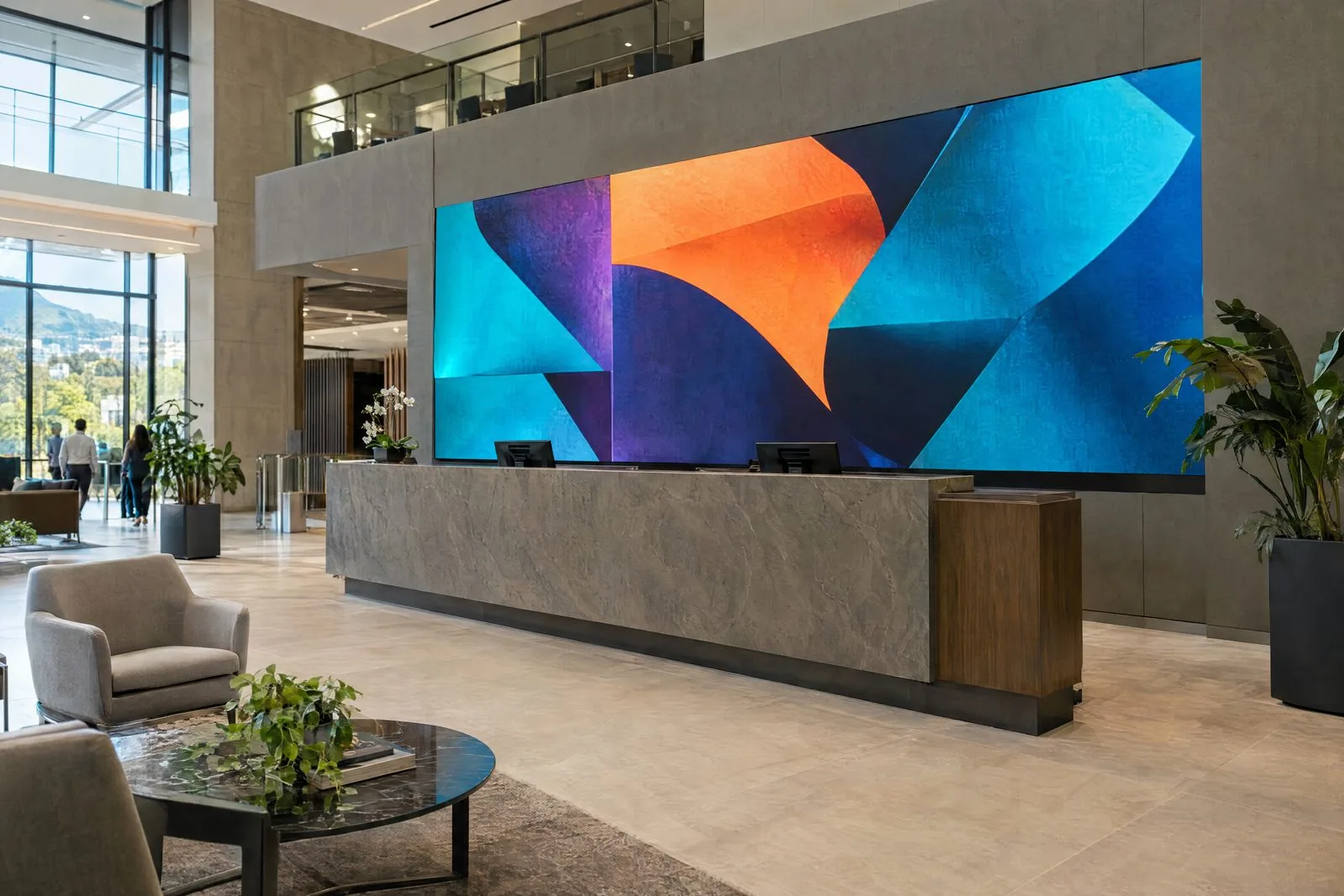
Indoor LED display screens suit large, frameless images in flagship stores, lobbies and corporate spaces. LED panels tile without borders, so the picture reads as one continuous canvas, and you can build the wall as big or small as the space allows. Pixel pitch matters here: a finer pitch holds up better when people stand close. Viewing from arm’s length, at a counter or reception desk? Compare LCD too. DMX’s LCD panels offer sharper close-up detail at a lower cost per m². Our commercial-grade screens page explains the options.
Outdoor LED Screens: Built for Sun, Rain and Dust
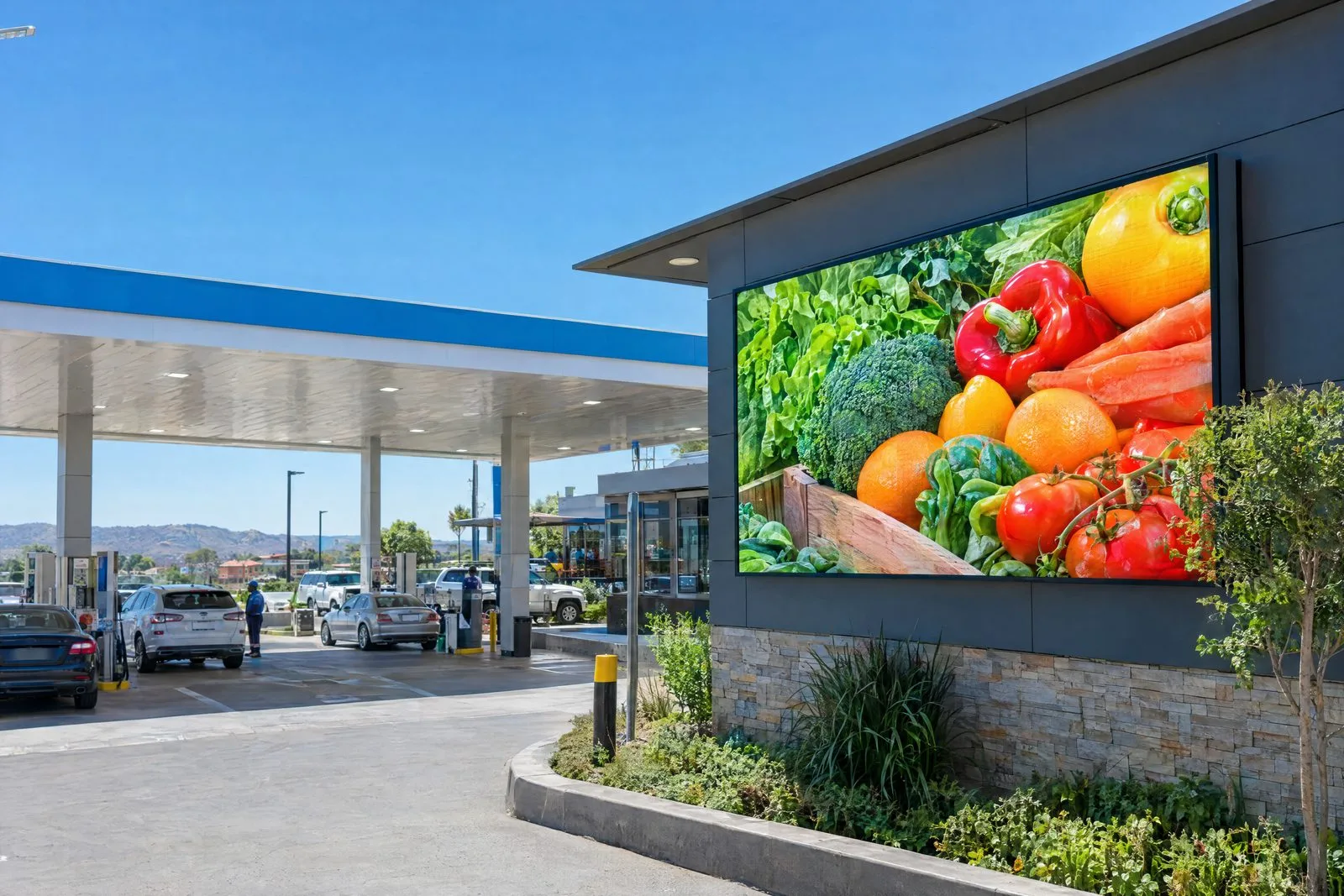
An outdoor LED screen uses weatherproof, IP-rated panels built to handle direct sun, rain and dust without losing brightness or colour accuracy. That makes it the natural fit for retail frontages, forecourts, stadiums and drive-through displays. Brightness is the big difference from an indoor screen. Outdoors, the picture has to stay readable in daylight, so the screen runs much brighter. Outdoor digital signage isn’t limited to LED, but LED panels suit large-format outdoor installations best. Our outdoor digital signage page shows the full range of outdoor screens.
LED Poster Screens: A Slim Alternative to Printed Posters
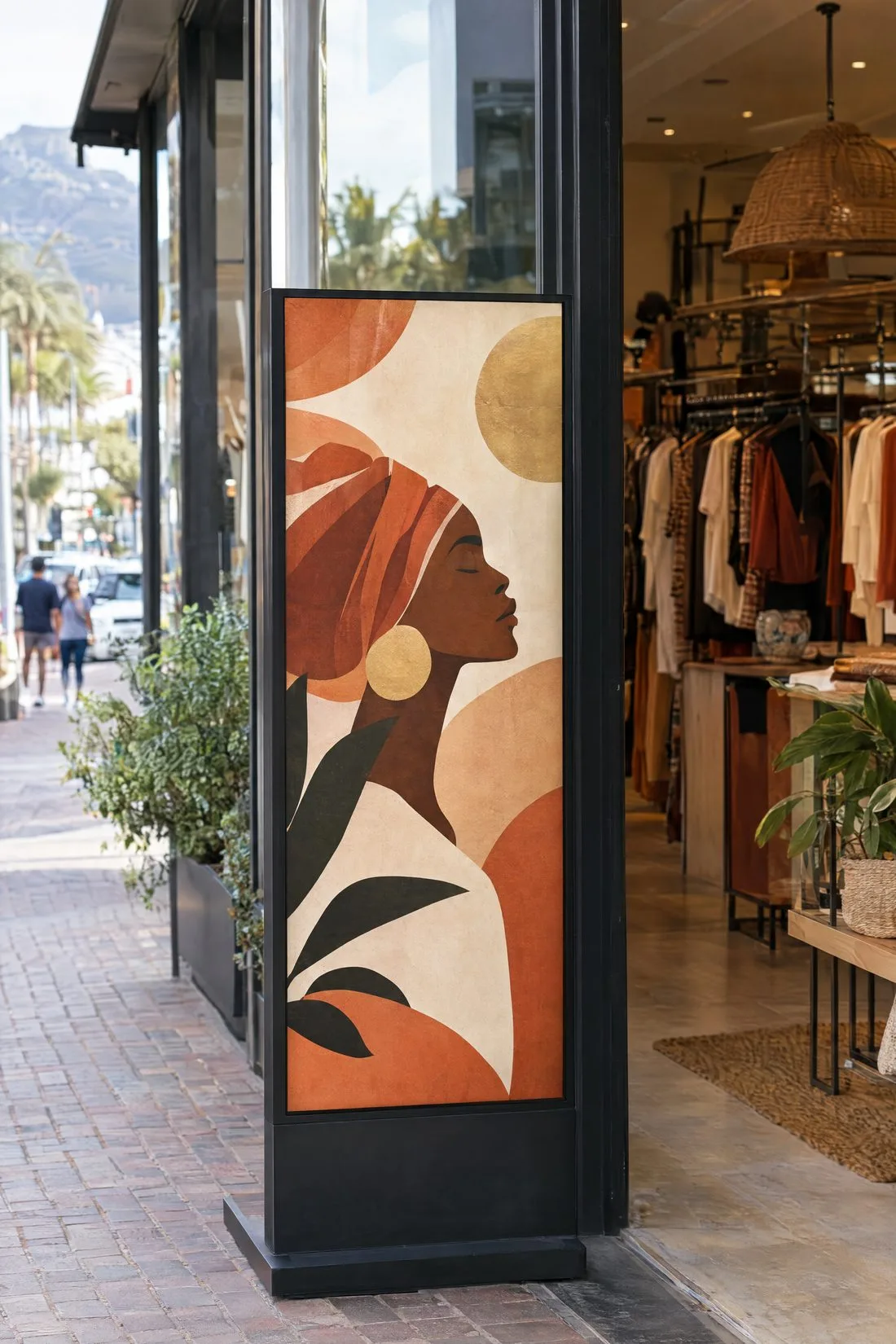
Think of an LED poster screen as a digital version of a printed poster: slim, portrait-format and usually a single ready-to-mount unit. That suits doorways, shopfronts and narrow wall spaces where a full video wall won’t fit. You change the content instead of reprinting it. The size is fixed, though. If you want a display that can grow, a tiled LED wall gives you that freedom.
Flexible LED Screens: Displays That Follow the Curve
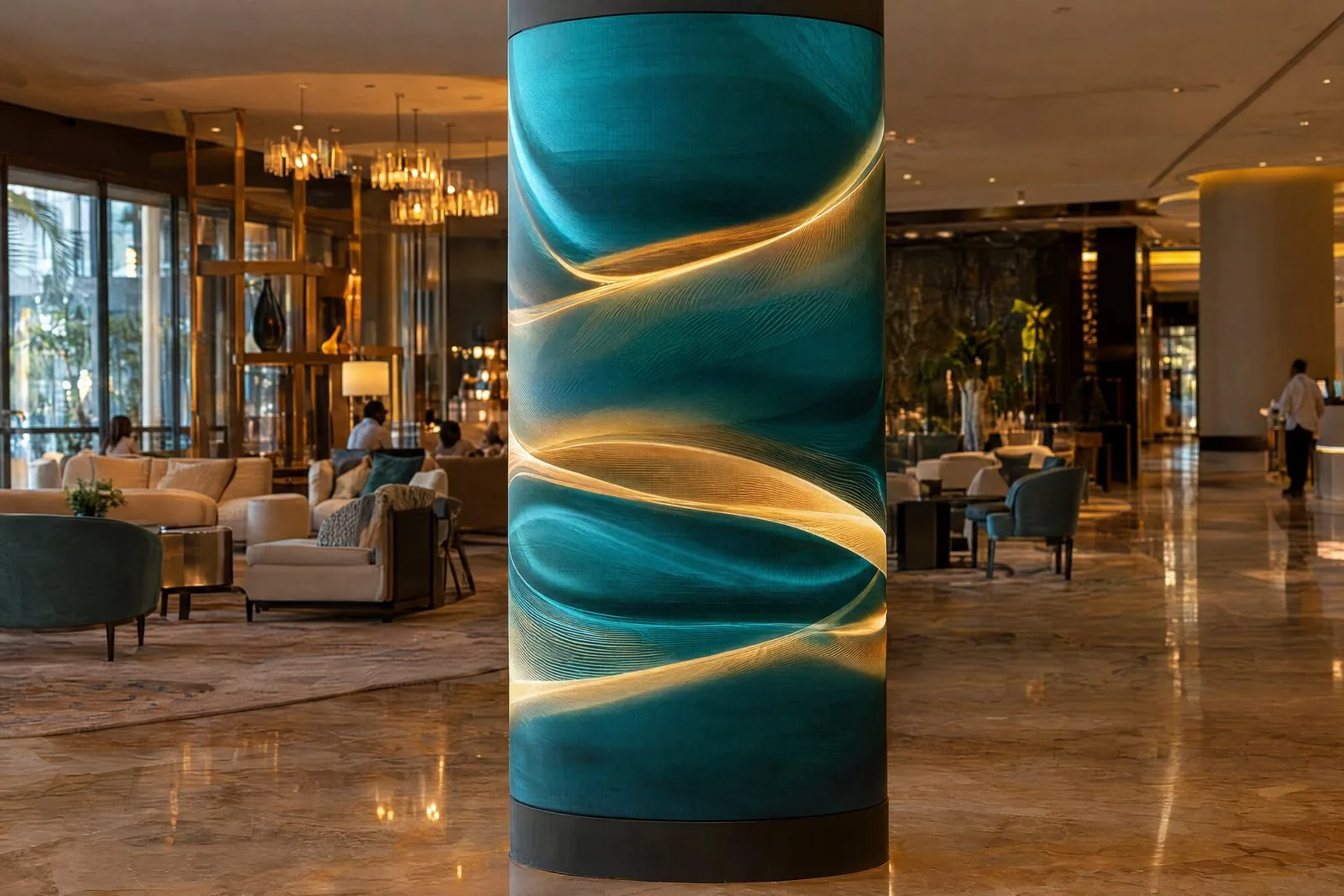
Flexible LED screens use bendable modules, so the display can wrap around curved walls, columns and other shapes a flat panel can’t follow. They’re a good fit for spaces with architectural features that a standard rectangle would ignore. The trade-off is planning. Curved installations need careful design, so involve your supplier early and share measurements and photos of the space.
Transparent LED Screens: Digital Content on Glass
Want video on a window without blocking the view? That’s what a transparent LED screen does. It lets light pass through, so it works on glass shopfronts, showroom windows and glass facades. Content design matters. Artwork looks best when it uses the see-through effect, and a transparent screen won’t look as solid as a standard LED panel. It’s the right pick when daylight and the view matter as much as the message.

Which LED Screen Type Fits Your Business?
Match the screen to the space:
- Retail stores: choose indoor LED for a flagship wall, or a poster screen for a slim entrance.
- Restaurants and drive-throughs: choose outdoor LED where the screen faces sun, rain or dust.
- Hotels and lodges: choose indoor LED for lobbies, or flexible or transparent screens where the architecture or glass calls for it.
- Any glass frontage: choose transparent LED if the screen must not block the view.
- Curved wall or column: choose flexible LED.
DMX’s video wall range covers LED and LCD panels rated for indoor and outdoor use, in custom sizes and shapes. Have poster, flexible or transparent formats in mind? Describe your space to a consultant and they’ll tell you what’s possible. Torn between one big screen and several smaller ones? Read LED wall vs multiple display screens.
Managing Your LED Screens After Installation
Whatever type you pick, you still need a way to run it. Every DMX video wall is powered by the Harmony platform, which gives you one controller to schedule, update and manage content across every screen in real time, from one location or many. There’s no separate software to learn and no updating screen by screen.
Talk to DMX About LED Screens for Your Space
Tell us where the screen will go, how far away people will stand and roughly what you want to spend. Our team will recommend the right panel technology and design a solution to fit. Have a look at our video wall solutions, then ask for a free consultation.